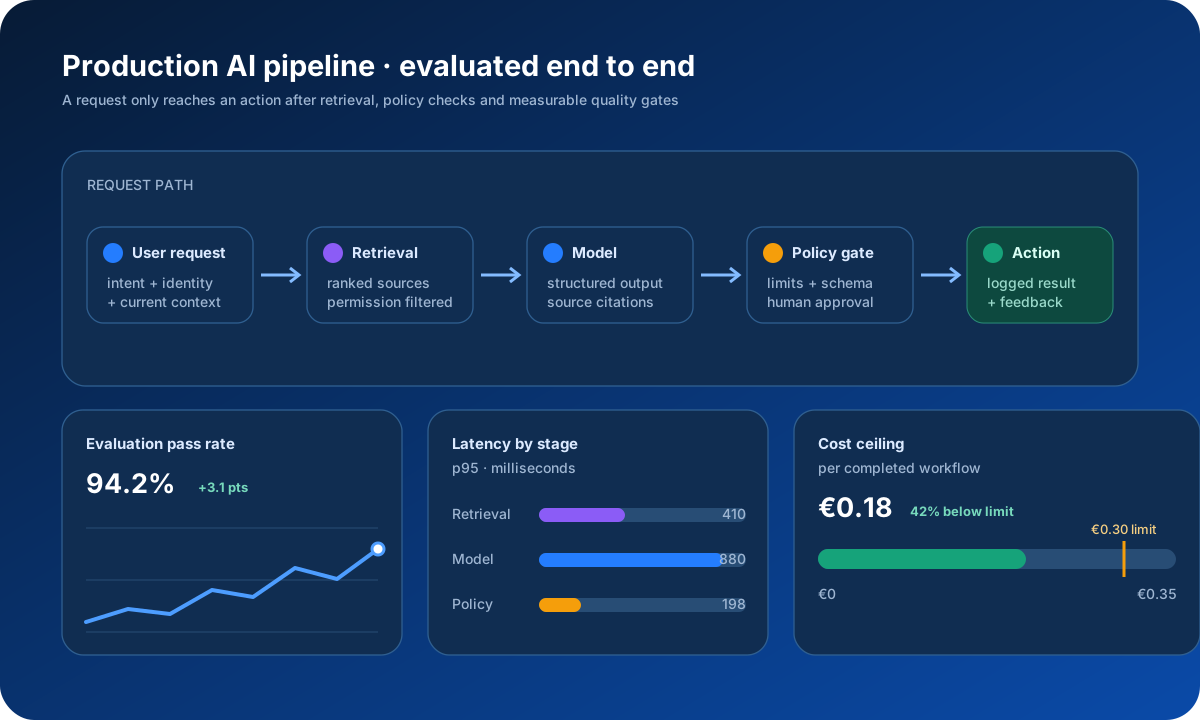
Demos are easy. What breaks in month three is the data pipeline, the permission model somebody assumed would hold, the absence of any way to tell whether quality dropped, and a bill nobody forecast. That is the work we take on.
A chat box bolted onto a product gets used twice. What earns its place is a model with real context and one narrow job, sitting inside a workflow people already follow.
Documents, tickets, policies and records made searchable in natural language, with answers that cite their sources so they can be checked.
Turning CVs, job descriptions, invoices and free-form submissions into validated structured data your systems can act on.
First drafts of job specs, review summaries and reports, placed where the work already happens, with a human keeping the final say.
Tagging, deduplication and triage of incoming volume, with confidence thresholds that hand the uncertain cases to a person.
MCP is how an assistant reaches a real system instead of inventing an answer. We build the server in between, and we spend as much time on what it refuses to do as on what it allows.
A typed tool interface over your database, API or internal service, so assistants can query and act through a contract you control, rather than screen-scraping or a shared admin password.
Packaged instructions for recurring work: how your team runs a review cycle, prepares a compensation proposal or triages a candidate pipeline. The assistant then follows your method rather than a generic one.
Read-only by default, scoped credentials, rate limits and a log of every call. An agent should not be able to do anything the person behind it could not do themselves.
Wiring the result into the tools your team actually uses, plus the documentation that makes it maintainable once we hand it over.
A prompt that works once in a playground is a screenshot. Running it nightly against real volume, with failures handled and costs bounded, is a different piece of engineering.
Multi-step flows with branching, retries, partial failure handling and idempotency, so a rerun does not duplicate work or corrupt state.
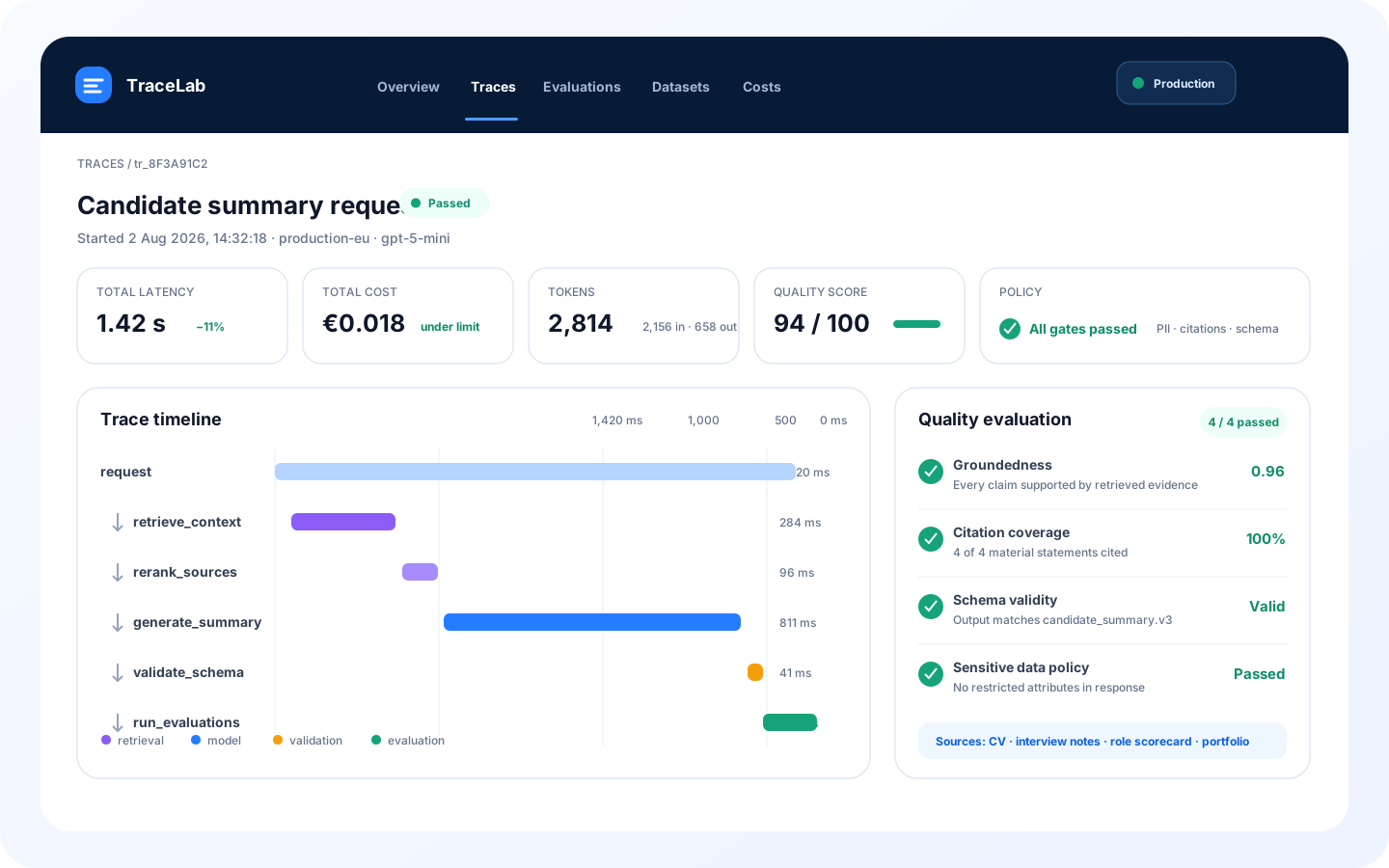
Test sets and scoring built before rollout, so changing a prompt or a model is a measured decision instead of a hunch.
Tracing at each step, with inputs and outputs retained under your retention policy, because debugging a bad answer means seeing what the model was given.
Caching, model routing by task difficulty, batching and hard budget ceilings, with per-feature cost reporting so spend stays attributable.
A good share of what arrives labelled as an AI problem turns out to be a reporting gap, dirty data, or a process nobody follows. Put a model on top of that and you get wrong answers delivered with more confidence.
When that is what we find, we will tell you and suggest the unexciting fix. It costs you less and it holds up.
Describe what the system should do and what it would need to read. You will get an approach, the risks worth knowing about up front, and a cost range that accounts for traffic rather than a pilot.
Talk to UsDiscovery €3,600 fixed, build from €16,000, model usage billed at cost.
See the stages and what each one includes